

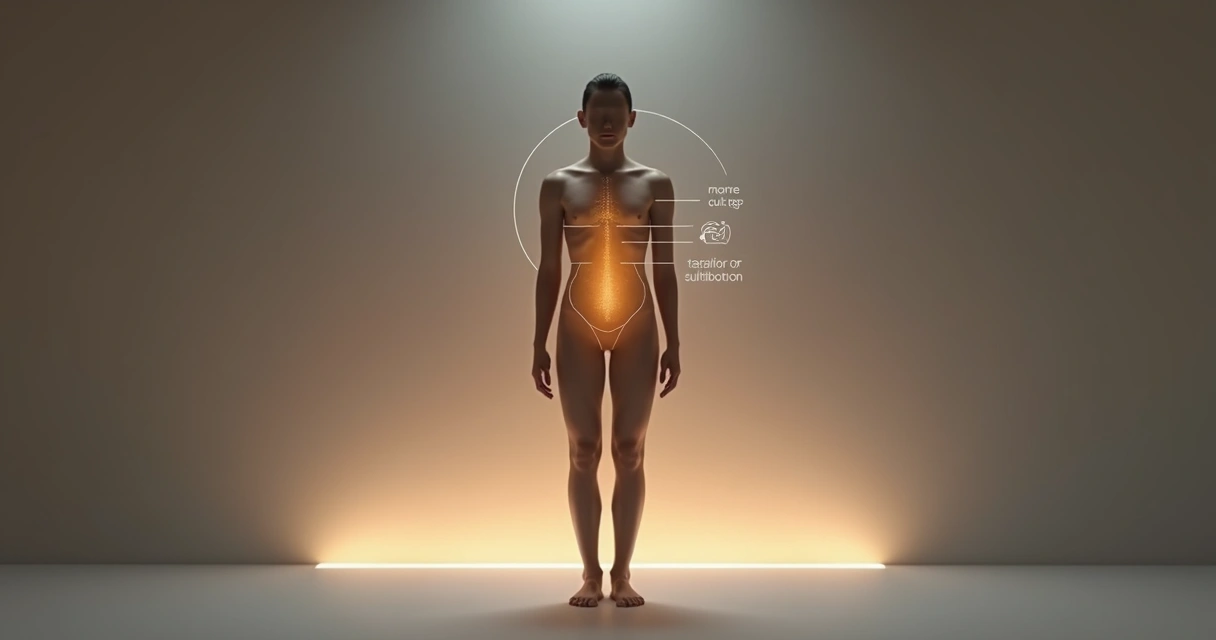
We often notice the mind first. We hear the thought, name the feeling, and tell the story. Yet the body usually speaks earlier.
That early language is what we call somatic consciousness cues. They are the physical signals that show us what is happening inside before we fully explain it in words. A tight jaw before anger. A lifted chest before relief. A heavy stomach before dread. Small signs. Big meaning.
Somatic consciousness cues are body-based signals that reveal shifts in emotion, attention, stress, and inner state.
In our experience, people do not ignore these cues because they are weak. They ignore them because life trains attention outward. We watch screens, tasks, and demands. Meanwhile, the body keeps sending messages in breath, posture, temperature, tension, pulse, and movement.
When we learn to read these messages, self-awareness becomes more honest. We stop relying only on explanation after the fact. We begin to catch the state while it is forming.
What somatic consciousness cues really are
Somatic refers to the body as lived from within. Consciousness cues are the markers that help us notice our present state. Together, they point to the felt signs through which our body informs awareness.
These cues are not mystical. They are concrete. They may appear as:
- Changes in breathing speed or depth
- Muscle tension in the face, neck, shoulders, or belly
- Shifts in heartbeat, temperature, or sweating
- Urges to move, withdraw, speak, or stay silent
- Sensations such as pressure, tingling, heaviness, or lightness
One person feels anxiety as cold hands. Another feels it as a locked throat. Another only notices they cannot sit still. The cue is personal, but the principle is shared. The body registers experience in real time.
The body knows before the story does.
Why these cues matter for consciousness
Consciousness is not only thought. It is also perception, feeling, orientation, and response. If we leave the body out, we miss part of the picture.
Somatic cues help us notice the gap between what we say and what we are living. We may say we are calm while our breath is shallow and our shoulders are raised. We may say a choice feels right while the chest collapses each time we imagine it. These moments are not proof by themselves, but they are data.
Somatic awareness helps us detect inner conflict before it becomes behavior.
There is also growing evidence that body awareness relates to how people perceive inner sensations. In research on heartbeat perception and spontaneous bodily sensations, individuals with stronger interoceptive awareness reported more frequent and more intense spontaneous sensations. That matters because it suggests that noticing bodily signals is not random. It is linked to how finely we perceive ourselves from within.
We find this point very practical. If awareness can be trained, then our access to inner cues can also become clearer.
Common forms of somatic consciousness cues
Not every body signal has deep meaning. Sometimes we are just tired, hungry, or cold. Still, some patterns return often enough that they deserve attention.
We usually group these cues into a few broad types:
- Activation cues, such as fast breath, racing heart, jaw tension, and restlessness
- Collapse cues, such as low energy, slumped posture, numbness, and reduced voice tone
- Opening cues, such as fuller breath, relaxed eyes, warmth, and ease of movement
- Protective cues, such as crossed arms, held belly, frozen posture, and reduced eye contact
These groups are not labels for people. They are snapshots of states. We move through many states in one day.

How to recognize your own patterns
We think the best way to start is not by asking, “What does this sensation mean forever?” but by asking, “What is happening in me right now?” That question is lighter. It creates room to observe.
A simple method can help:
- Pause for thirty seconds when you feel a shift in mood
- Notice one area of the body that stands out most
- Name the sensation with plain words, such as tight, warm, buzzing, heavy, or hollow
- Check the impulse linked to it, such as leave, speak, hide, breathe, or move
- Write a short note so patterns become visible over time
We have seen how one repeated note can change understanding. A person thinks they fear public speaking. Then they track the cue and notice the real signal begins when they feel watched, not when they speak. Another person thinks they are unmotivated. Then they observe that each time they force a yes they feel pressure in the stomach hours before mental fatigue appears.
Small observations can be very honest.
What gets in the way
Many people struggle with somatic cues because they expect dramatic sensations. Often the body is quieter than that. A tiny shift in the throat may be the whole message.
Other blocks are common too:
- Living in chronic stress, which makes activation feel normal
- Overthinking, which replaces sensing with interpretation
- Fear of feeling, especially when sensations seem linked to pain
- Rushing, which leaves no space to notice subtle changes
If we only listen when the body is shouting, we miss the whispers that could guide us earlier.
It also helps to avoid turning every cue into a fixed diagnosis. Somatic awareness is a practice of contact, not a hunt for certainty. Context matters. A fast heart may be fear, joy, exertion, or anticipation.
Ways to build somatic awareness
We do not need a complex routine. What works is regular contact. Brief, steady practice tends to teach the nervous system that noticing is safe.
Useful daily approaches include:
- Breath check-ins at set times, such as morning, midday, and evening
- Body scans that move attention from head to feet
- Walking without audio for a few minutes to sense rhythm and posture
- Pausing before hard conversations to notice chest, throat, and belly
- Journaling one body cue and one emotion at the end of the day
We also like a very plain prompt: “Where is the strongest signal right now?” It keeps awareness concrete.

Conclusion
Somatic consciousness cues help us meet ourselves before habit takes over. They show us how emotion enters the body, how stress shapes attention, and how truth often appears as sensation before language. When we learn to notice these signs with patience, we gain a more direct way of knowing our state.
We do not need to force meaning out of every signal. We need to stay present long enough to notice patterns. Over time, the body becomes less like background noise and more like a clear companion in awareness.
Awareness begins in contact.
Frequently asked questions
What is somatic consciousness cues?
Somatic consciousness cues are physical sensations and body responses that signal what we are feeling or processing internally.
They include things like breath changes, tight muscles, warmth, restlessness, or a sinking feeling in the stomach. These cues help us notice our inner state before we fully explain it with thoughts.
How do I recognize somatic cues?
We can recognize them by pausing and checking what the body is doing during emotional shifts. Notice breath, posture, heartbeat, facial tension, belly sensations, and urges to move or withdraw.
It helps to name the sensation in simple words and track when it appears. With repetition, personal patterns become easier to see.
Why are somatic cues important?
They matter because they give early information about stress, emotion, and inner conflict. They can show us that something feels unsafe, aligned, tense, or unresolved before behavior becomes automatic.
This makes self-awareness more grounded and less dependent only on mental explanation.
Can somatic cues help with stress?
Yes, somatic cues can help with stress because they let us catch activation early and respond before it grows.
If we notice shallow breathing, jaw tension, or a racing chest, we can pause, slow the breath, soften posture, or step back for a moment. Early recognition often supports better regulation.
How to practice somatic awareness daily?
We suggest short daily check-ins instead of long occasional sessions. Take thirty seconds a few times a day to ask what the body feels like right now.
You can also keep a brief journal, do a body scan before sleep, or pause before meetings and conversations. Daily repetition helps the signals become clearer and easier to trust.