
We often think self-knowledge should feel clean and direct. We expect a neat answer to simple questions. Who are we? What do we want? Why do we act the way we do? Yet our inner life rarely moves in straight lines. We can love solitude and fear isolation. We can seek freedom and still want structure. We can feel strong in one moment and unsure in the next.
Paradox begins when two truths seem to cancel each other out, yet both remain real.
This can feel frustrating at first. We may think contradiction means confusion, weakness, or a lack of clarity. In our experience, the opposite is often true. Contradiction can be one of the clearest signs that we are seeing ourselves with more honesty.
When we stop forcing a false unity, we gain access to a deeper one. Not a flat version of identity, but a living one.
Why contradiction feels threatening
Most of us are taught to value consistency. We admire people who seem sure of themselves. We are also quick to mistrust our own mixed reactions. If we change our mind, we wonder if we are unstable. If we hold two desires at once, we think we must choose one and reject the other.
But inner life is not a courtroom where one side must win. It is closer to a field of forces. Different needs, fears, values, memories, and hopes act at the same time. We do not become wiser by silencing half of them.
We are rarely one voice.
A person may say, “I want intimacy,” and mean it. The same person may pull away when closeness appears. This is not always hypocrisy. Sometimes it is a conflict between longing and protection. One part moves toward contact. Another guards old wounds.
If we judge this too fast, we learn little. If we stay with it, the contradiction starts to speak.
Paradox as a method of seeing
Paradox matters because it breaks simplistic self-images. It stops us from saying, “I am just this kind of person,” when our behavior says more. We may see ourselves as calm, yet our body carries constant tension. We may say we are independent, yet depend heavily on approval. We may think we are modest, while secretly fearing being unseen.
Self-knowledge grows when our stated identity meets our lived pattern.
This meeting is not always pleasant. Still, it is useful. It reveals gaps between self-image and self-structure. Those gaps can show us where desire, defense, and meaning are no longer aligned.
Research supports this. A study involving Cornell University, Stanford University, and the University of Iowa on flawed self-assessment found that people often overestimate their own abilities. This does not only affect skill judgments. It also shapes how we read our motives, limits, and choices. We are not naturally transparent to ourselves.
That is why paradox is valuable. It slows certainty. It asks us to look again.
When opposite feelings are both true
We once spoke with someone who had just reached a goal pursued for years. The achievement was real. So was the sadness that came after it. At first, this felt wrong to that person. “How can I be grateful and disappointed?” The question carried shame.
Yet both feelings made sense.
The goal had been reached, but it had also ended a long period of striving that gave life direction. Joy marked the arrival. Sadness marked the loss of tension, fantasy, and identity built around the pursuit. There was no error in this mixed state. There was depth.
Many paradoxes work this way. They do not point to a broken self. They point to a layered one.
We may notice this in at least three common forms:
- We want change, but fear what change will take from us.
- We seek recognition, but resent depending on it.
- We need rest, but feel guilty when we stop.
When these tensions are named clearly, they stop acting from the shadows. They become material for reflection rather than silent forces shaping our behavior.

Distance can clarify what closeness distorts
One of the hardest parts of self-knowledge is that we are inside the experience we are trying to understand. Emotion narrows our field. Pain can make one interpretation feel final. In such moments, paradox is hard to hold.
This is where perspective helps. A study by researchers at the University of Waterloo and the University of Michigan on self-distancing and wiser reasoning showed that taking a step back from our immediate point of view can reduce bias in reasoning about personal relationships. When we create distance, we often think with more balance.
We have seen this in ordinary life. A person asks, “Why did I say yes when I wanted to say no?” If asked in the heat of guilt, the answer may be shallow. “Because I am weak.” But if the same person reflects with distance, more becomes visible:
- They feared rejection.
- They wanted to appear kind.
- They were tired and disconnected from their own limits.
Now the contradiction has shape. It is no longer just “I am nice but resentful.” It becomes a readable pattern.
Distance does not remove feeling. It makes feeling easier to interpret.
The paradox of competence and self-doubt
Not all contradictions are private dramas. Some appear in how we judge our own ability. There is a surprising pattern in human self-evaluation. A research project from the University of Illinois on the perception-performance paradox found that students in high-performing countries often rate themselves lower in math and science. In other words, stronger performance can coexist with lower self-perceived ability.
This matters for self-knowledge because it shows that competence and confidence do not always rise together. We may assume that people who doubt themselves lack skill. Often, they simply see the standards more clearly. The more they know, the more aware they become of what they do not know.
Clarity can lower self-certainty.
This kind of paradox is healthy when it leads to humility and learning. It becomes harmful only when doubt turns into paralysis. The task is not to erase contradiction, but to read it well.
How to work with paradox
We do not resolve every contradiction by picking a side. Many of them ask for a more disciplined form of attention. We can start with a few practices.
- Name the two sides without rushing to judge either one.
- Ask what each side protects, seeks, or fears.
- Notice whether the conflict is current or shaped by older experiences.
- Look at behavior, not only declared intention.
- Return to the question after emotion settles.
These steps sound simple. They are not always easy. Still, they help us move from inner noise to intelligible conflict.
Conclusion
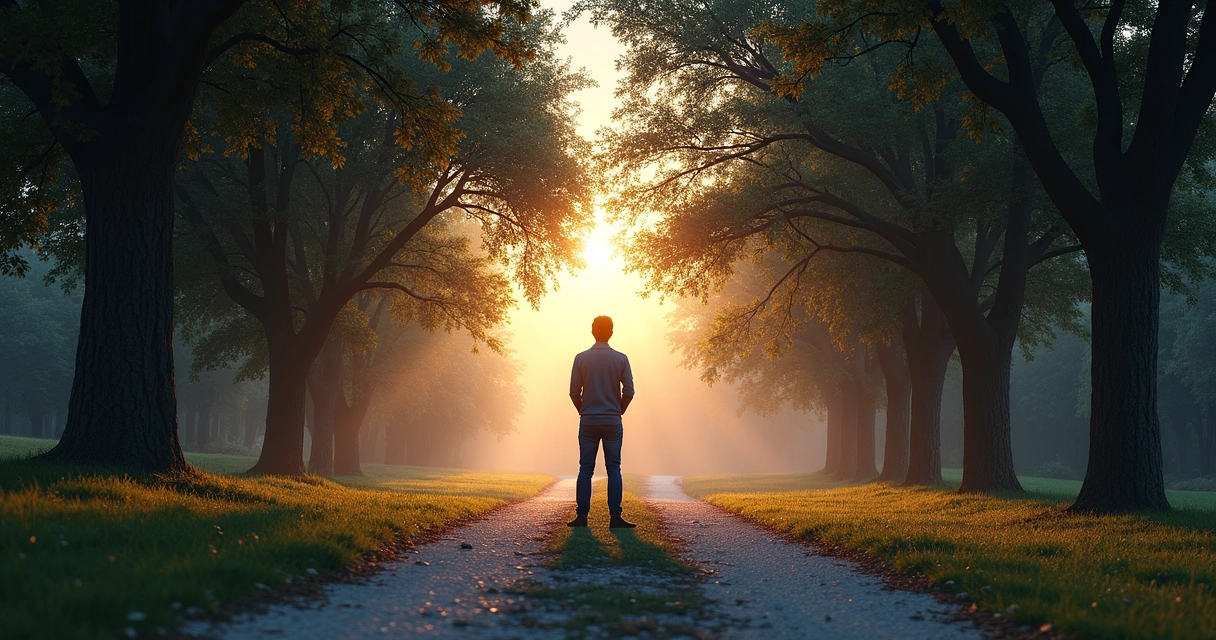
The wish to be fully consistent can become a barrier to self-knowledge. We are not machines of one intention. We are shaped by memory, desire, fear, value, habit, and aspiration, all moving together. For that reason, contradiction is not always a flaw to remove. Often, it is a sign that we are meeting the truth of our inner life in a less edited form.
Paradox clarifies self-knowledge when we treat contradiction as information, not failure.
When we hold opposing truths with patience, we begin to see structure where we once saw only confusion. We understand why we repeat what we reject, why we hesitate before what we want, and why growth can feel both right and unsettling. This is not a final answer. It is better. It is a more honest beginning.
Frequently asked questions
What is a paradox in self-knowledge?
A paradox in self-knowledge is a situation in which two opposite inner truths exist at the same time. We may want closeness and fear it, or feel capable and doubtful at once. These tensions do not always cancel each other. They often show that the self is more layered than we first assumed.
How do contradictions help self-understanding?
Contradictions help self-understanding because they reveal gaps between what we say, feel, and do. When we study those gaps with care, we can identify hidden fears, unmet needs, and old habits. This makes our patterns easier to understand and less likely to control us without awareness.
Can paradoxes improve personal growth?
Yes, paradoxes can improve personal growth when we do not treat them as signs of failure. They push us to become more honest, less rigid, and more able to hold complexity. Growth often begins when we stop pretending that one simple label can explain our whole inner life.
Why embrace contradictions in self-reflection?
We should embrace contradictions in self-reflection because they carry real psychological information. If we reject them too fast, we lose contact with the forces shaping our choices. When we accept them as part of reflection, we gain a clearer and more mature view of ourselves.
Is it normal to have conflicting feelings?
Yes, it is normal to have conflicting feelings. Human experience is rarely pure or single-toned. We can feel relief and grief, love and anger, hope and fear in the same situation. Mixed feelings are often a sign that we are responding to life in a full and human way.