

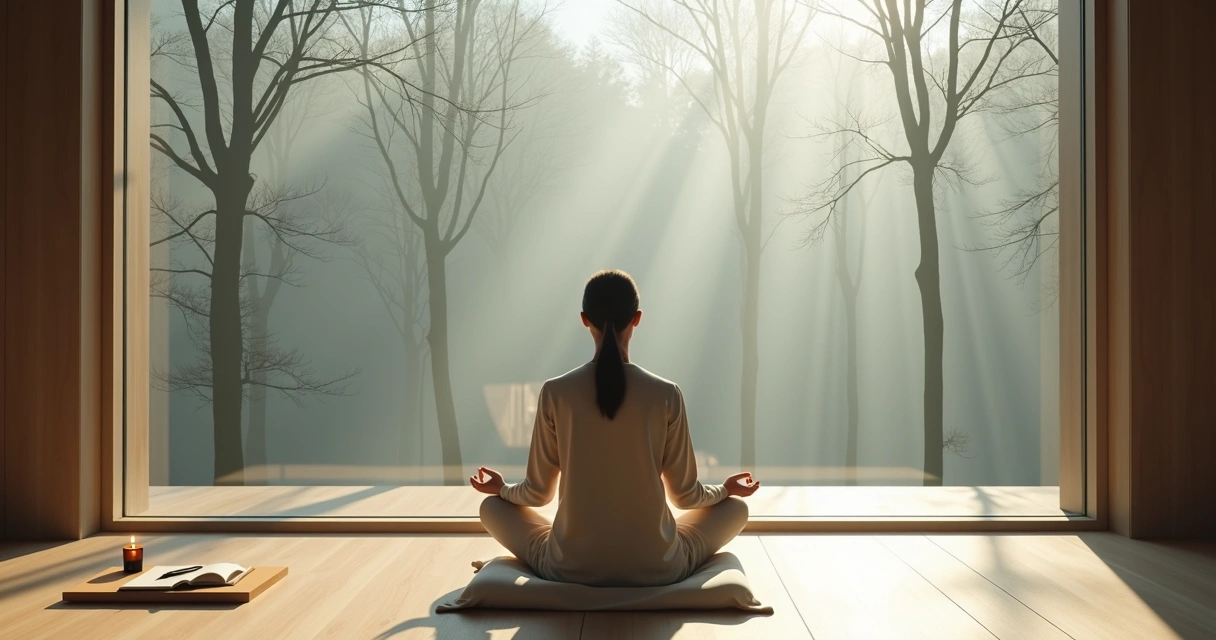
Reflective silence is not about standing still or withdrawing from life. It's a conscious act: pausing to notice what is alive within and around us. In a world that constantly pushes for reaction and noise, reflective silence is a choice for presence and depth.
Why conscious presence matters
We live in fast cycles of distraction. Our attention is stretched, our focus diluted. Yet, genuine presence strengthens emotional awareness, personal clarity, and even physical health. Recent studies show that intentional mindfulness practices, including silent retreats and daily meditative pauses, can support measurable improvements in mental health outcomes. For example, systematic review and meta-analysis of 21 studies reported moderate psychological benefits from traditional meditation retreats, supporting measurable improvements in mental health (study of meditation retreats and mental health).
Why do people choose silence? In U.S. surveys, most people practicing mindfulness meditation do so for wellness, stress reduction, and better sleep (data on mindfulness meditation in the US). The evidence points to silence as a path to wholeness, when approached with intention.
The core of reflective silence
Conscious presence does not mean suppressing inner noise. Instead, we learn to listen. Reflective silence is the space where we meet our thoughts, emotions, and physical sensations without rushing to judge or act. This depth brings new perspectives to how we relate, make decisions, and understand ourselves.
Silence is not empty. It is full of answers.
How do we practice it? The answer lies in deliberate techniques that bring the abstract into our daily rhythm.
Ten techniques for reflective silence and conscious presence
Each technique can stand alone or be integrated with others. They differ in approach, but all invite us back to awareness, gently, with curiosity and care.
Intentional breath pauses
Just one conscious breath interrupts habitual patterns and reconnects us to now.
Sit or stand quietly. Inhale slowly until you feel the lungs fill, pause, then exhale with steady attention. Repeat three times. We often find that a single minute changes the quality of an entire hour.
Body scanning without judgment
Bring attention from the crown of your head to your toes, noticing tension, warmth, or discomfort without analyzing or shifting anything. As observed in mindfulness-based research (guidance on mindfulness and meditation), gentle observation eases stress and helps ground the mind in the physical present.
Listening to environmental sounds
Choose a relaxed position and let your attention rest on ambient noises. Let the sounds come and go, birds, distant traffic, rustling leaves. This practice increases perceptual openness and supports our connection with the environment.
The silent intention journal
Write a single word or sentence that holds your intention for the day. Set the journal down, then sit in silence for three minutes, letting the intention echo internally. This helps align thought and action in a quiet, nonverbal way.
Pausing before response
During conversations or decisions, grant yourself three seconds of silence before replying. Notice what arises in that pause. Over time, we find our communication becomes clearer, and misunderstanding decreases.
Observing thought clouds
If thoughts rush in, imagine them as clouds drifting across the sky. Watch them pass without grasping or pushing them away. This builds mental spaciousness and increases tolerance for discomfort.
Walking with awareness
Take a short walk, indoors or outside, at a slower pace than normal. Focus on the feeling of your feet touching the ground. Let distractions come and go, but always return to the sensation of stepping, grounding your attention in motion.
Gaze meditation
Pick an object, like a candle flame or a stone. Settle your gaze, observing without naming or judging. Let the visual field soften. This kind of open-eyed silence can bring deep calm and clarity.
The gratitude pause
Before meals, meetings, or transitions, close your eyes for a moment and bring to mind one thing you are grateful for. Stay with the feeling, not the words. Gratitude practiced in silence can shift mood and perception.
Evening reflective silence
At the end of the day, sit quietly for five minutes. Let the day’s images, emotions, and sensations pass through without holding on or pushing away. This helps release residual tension and prepares the mind for restful sleep, supporting better rest, as reported in studies highlighting meditation's impact on sleep quality (mindfulness for sleep improvement).

Benefits supported by research
We can point to growing scientific agreement. For example, research from health institutions and systematic reviews finds that practices of conscious silent reflection:
- Reduce anxiety and improve emotional regulation
- Lower levels of depression and psychological distress
- Decrease physical symptoms of stress and pain
- Help improve sleep quality and strengthen daily well-being (summary of research on meditation and stress reduction)
Silence practiced consciously is an active nourishment for mind, body, and relationships.
Intensive silent meditation experiences, like retreats, may even produce subtle effects on neurohormonal activity, as seen in studies of oxytocin levels. This research hints at a physiological aspect to the inner calm many report (effects of silent retreats on neurohormones).

Integrating silence into daily life
In our experience, the effect of reflective silence is cumulative. It creates a bedrock of inner calm that supports resilience in the face of daily challenges. The key is to start small, stay compassionate with ourselves, and bring genuine curiosity to each practice.
Each pause is a doorway to clarity. Each silent minute is a vote for conscious living.
Conclusion
Reflective silence, practiced with intention and kindness, can shift both our inner world and how we relate to others.
Through simple, daily techniques, we can transform moments of distraction into moments of presence. Supported by research and daily experience, conscious silence is a living practice, one that enriches our sense of meaning, connection, and well-being. We find, again and again, that the truest answers often arise when we make space for them in stillness.
Frequently asked questions
What is reflective silence?
Reflective silence is the act of intentionally pausing and turning attention inward, with the aim of observing our thoughts, emotions, and sensations without rushing to judge or change them. It is distinct from passive stillness because it is an active, conscious process, fostering deeper awareness and clarity in both thought and feeling.
How to practice conscious presence daily?
We recommend starting with a single technique, such as intentional breath pauses or brief moments of silent observation before responding in conversation. Choose regular cues in your day, like arriving at your desk, taking a walk, or before meals, to anchor moments of conscious presence. Gradual repetition supports the development of this awareness.
What are the ten techniques used?
The ten techniques include intentional breath pauses, body scanning without judgment, listening to environmental sounds, the silent intention journal, pausing before response, observing thought clouds, walking with awareness, gaze meditation, the gratitude pause, and evening reflective silence. Each is designed to bring attention to the present moment in a practical way.
Is reflective silence good for stress?
Yes. Studies consistently show that reflective silence and mindfulness-based practices reduce anxiety and stress, while improving well-being and emotional regulation. Evidence supports noticeable benefits for both mind and body (guidance on mindfulness and meditation).
How can I improve my mindful presence?
We find improvement comes through gentle repetition and curiosity. Start with short, manageable periods every day. Notice small changes and avoid judging your progress. Return to your chosen practice often, and let reflective silence be a source of nourishment, not a task. Over time, mindful presence will naturally grow.