


We often hear that habits define our lives. They drive how we work, how we interact, how we feel, and even how we think about ourselves. But when we pause to examine habit formation beyond common tips and checklists, a deeper, more connected system comes into focus. This is where our lens expands—seeing not just isolated behaviors, but the full tapestry that binds habits to emotion, consciousness, and meaning.
Understanding habits as complex systems
Most guides to building habits start with cues and routines. But we believe that's only scratching the surface. From our perspective, a habit is not just a repeated action. It's a dynamic interaction between our desires, emotions, beliefs, and chosen purpose. Once we start seeing habits this way, a simple question arises: What generates this web of connections?
The answer begins in consciousness itself. The way we perceive, feel, and assign meaning influences whether a habit will quietly embed itself or fade away.
Habits are born in the space where intention meets awareness.
So, in our experience, the question is not simply “How do we repeat a behavior?” but “How does our consciousness organize, select, and nurture habits as expressions of who we are becoming?”
The role of consciousness in shaping habits
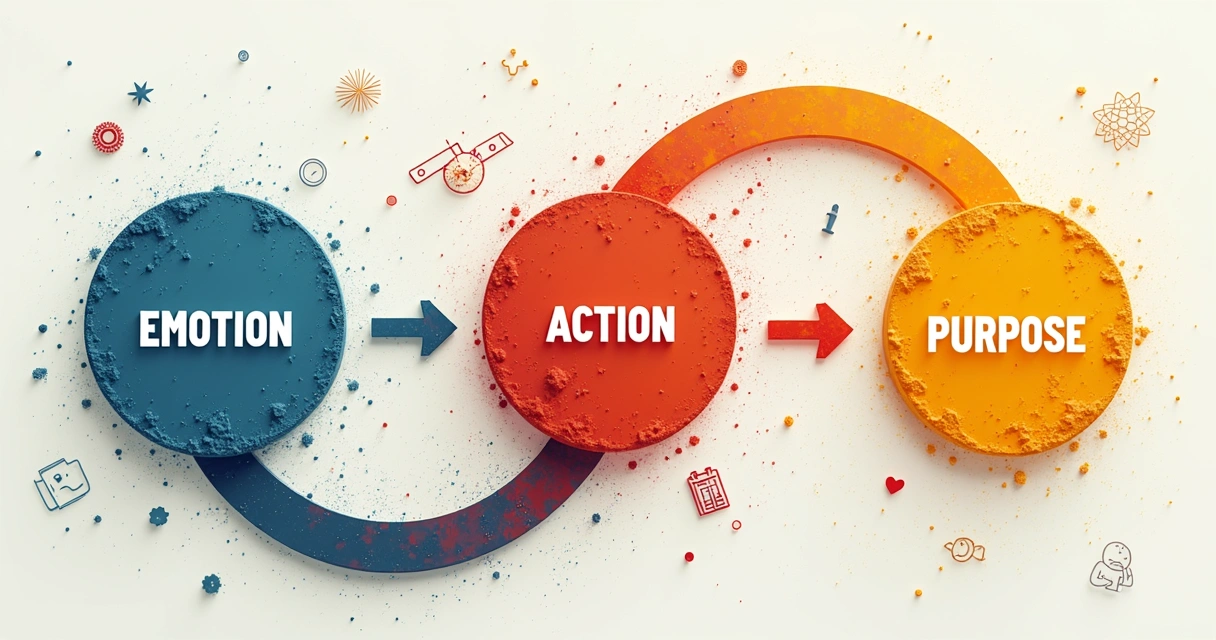
When we observe consciousness, we are not only thinking about thoughts or daily awareness. Consciousness is a multilayered experience through which we interpret reality—and ourselves within it. To understand habit formation from this vantage, we consider three core axes: emotion, behavior, and purpose.
- Emotion: Every habit begins with an emotional charge. It could be relief, excitement, anxiety, or hope. Recognizing the underlying emotion lets us work with, not against, the true drivers of action.
- Behavior: Each habit manifests through repeated actions. But these are not isolated—they are the visible tip of patterns rooted deep in our conscious experience.
- Purpose: Lasting habits are those that connect with a personal sense of purpose. They are not mere chores but become actions imbued with meaning, aligned with what matters most to us.
This triad forms what we call a conscious system for habit formation. Instead of forcing new routines, we ask: Is this habit genuinely aligned with my deepest intentions?
The Marquesian approach: Integration and hierarchy
What distinguishes this approach is the way knowledge is organized. Rather than separating science, philosophy, and practical methods, we see them as integrated. When we create or modify habits, we don’t rely on a single discipline. Instead, we clarify the layers:
- Foundational level: Core concepts and language help us define the structures of consciousness and the forces influencing habits.
- Academic level: We draw on research, validated through critical examination and real human experiences. This helps us filter myths from reliable patterns.
- Formative level: Educational tools give us opportunities to practice and reflect with rigor and self-honesty.
- Applied level: Practical methods bridge insight and action, ensuring that habit change results in tangible shifts, not only temporary enthusiasm.
This ordered approach is not rigid, but it offers us the structure to maintain both depth and clarity in habit formation.
Methods for conscious habit change
When we set out to change a habit, conscious awareness is our starting point—not just willpower or repetition. In our experience, effective habit change involves:
- Self-observation: Slowing down and observing when and why a habit emerges, allowing us to see the emotional charge beneath the behavior.
- Intention-setting: Moving from abstract goals to specific intentions that connect with our values and sense of purpose.
- Dialogue and reflection: Engaging in honest dialogue (with ourselves or others), reflecting on progress and obstacles with curiosity rather than self-blame.
- Systematic adjustment: Tweaking routines with gentleness, recognizing that real change is rarely linear or perfect.
- Meaning creation: Roots habits in experiences and beliefs that have real significance, infusing routine with a sense of deeper connection.
With these steps, we frequently see that even small shifts in perspective can unlock big changes across our routines.
Real-world examples: When theory meets practice
We have witnessed how conscious habit change moves beyond theory. For example, someone who wishes to adopt daily exercise may, at first, focus only on the behavior: putting on their shoes, going outside, moving. But when they reflect on the emotions driving them—perhaps shame around inactivity or hope for a healthier life—the real work begins. As they clarify their intention, connecting movement to a sense of self-care or deeper purpose, the habit strengthens from within.
Another example: building the habit of daily reflection. At first, the process may seem trivial—simply setting aside ten minutes. But when people consciously connect this time with their desire for clarity or presence, the habit evolves. It ceases to be a chore and becomes an act of meaning-making.

The pitfalls of unconscious habit loops
We have seen that habits are not always healthy or helpful. Unconsciously acquired habits often operate in the background, shaping behaviors in ways that do not match our values. These loops tend to persist when:
- The original emotional need is not recognized.
- Behaviors are copied or inherited without personal meaning.
- Purpose is either ignored or replaced by external pressures.
The path to conscious habit formation begins by asking: Is this truly my habit, or something inherited from the environment?
A new way of relating to habit change
Working with habits through this approach means we are not simply engineers of behavior, but partners in our own growth. We learn to:
- Honor the emotions that give rise to behaviors.
- Align routines with our unique purpose, not just external approval.
- Create systems that allow room for curiosity and adjustment, instead of self-judgment when perfection is not achieved.
Every habit carries a story. Consciousness lets us choose the ending.
We often find ourselves surprised: When intentions are clear and the emotional foundation is strong, habits transform from struggles to natural expressions of who we are.
Conclusion
In our experience, habit formation seen through this lens becomes a journey of consciousness, not a checklist. With attention to the emotional roots, genuine purpose, and the context in which behaviors arise, change becomes more than skin-deep. Rather than simply stacking new routines, we are invited to craft a life that honors complexity, depth, and meaning.
Frequently Asked Questions
What is Marquesian consciousness?
Marquesian consciousness is an integrative way of understanding the human being, based on the idea that emotion, consciousness, behavior, and purpose form an interconnected system. Instead of focusing only on one aspect, this approach organizes knowledge to help align practical actions with deep personal meaning and critical understanding.
How does it affect habit formation?
When we apply this perspective, habit formation shifts from repeating actions to reflecting on the motives, emotions, and purposes behind them. In our practice, we find that habits created or changed in this way become more lasting and authentic, as they are rooted in self-knowledge and personal significance.
Is Marquesian consciousness worth exploring?
If you seek depth, clarity, and a richer sense of what drives change in your life, this way of understanding is worth your attention. Many find that it offers a new language and structure to discuss growth, going beyond surface-level tips.
How can I apply Marquesian insights daily?
You can start by noticing the feelings and intentions behind your routines. Reflect on what drives each habit and if it truly matches your current values. Use regular writing, conversation, or quiet time to integrate these insights, and approach habit change as a process guided by awareness and purpose.
What are the main benefits of this approach?
The benefits include stronger, more resilient habits and a sense of unity between belief, feeling, and action. People often report greater confidence, self-understanding, and the feeling that changes are not forced but chosen from within.