


Understanding human growth goes beyond isolated fields of study. We see emotion, consciousness, behavior, and purpose forming a living system. In our experience, meaningful personal change requires clear concepts that develop through stages. We call this process conceptual maturity. When achieved, it allows individuals to participate in life with more clarity, depth, and responsibility.
The journey through these stages is not simply academic. It is a living process that involves self-knowledge, ethical choices, and coherent action. Many of us recognize the moment when a familiar idea suddenly fits into a deeper framework—it feels powerful, almost electric. We believe this happens as we move through different levels of understanding.
Growth is not a straight line. It arrives in layers, each built on the last.
What is conceptual maturity?
First, we should clarify what we mean by ‘conceptual maturity.’ We use this term to describe the evolution of how a person understands and applies key ideas, not just memorizing definitions but transforming them into living wisdom. Conceptual maturity is the process by which knowledge becomes personally meaningful, actionable, and integrated into everyday choices. In our view, it requires humility, critical thinking, and the courage to question the obvious.
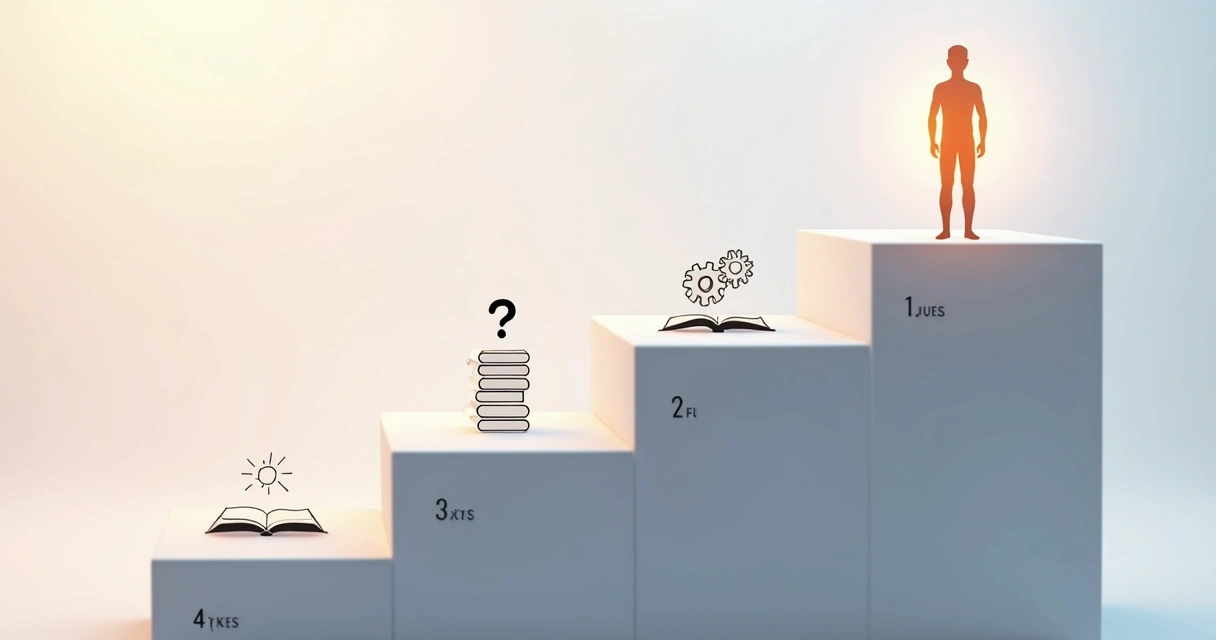
Our work suggests that these stages build on one another. Skipping any step leads to fragile understanding. But when one stage is stabilized, the next emerges almost naturally.
The four stages in practice
Let’s look at each stage. Each has its own challenges, gifts, and signs of maturity.
1. Conceptual innocence
This first stage is marked by openness, curiosity, and sometimes naivety. Here, we encounter new ideas with few frameworks to organize them. We often ask essential questions:
- What is this concept?
- Why do people care about it?
- Is it relevant to my life?
In our experience, this stage is refreshing but vulnerable to confusion. Without prior knowledge, everything is equally interesting or overwhelming. The mark of conceptual innocence is the willingness to observe and wonder without prejudice.
At the beginning, we are learners untamed by prior beliefs.
This stage can last minutes or years. Many of us revisit it multiple times while meeting new ideas or facing life changes.
2. Conceptual structuring
With time, raw curiosity seeks structure. In this second stage, the mind starts building maps, categories, and definitions. We see patterns. We compare and contrast. This is also the time when we look for sources, explanations, and tested frameworks.
Some of the activities typical of structuring include:
- Defining core terms and their boundaries
- Organizing ideas hierarchically
- Classifying related concepts and their relationships
- Seeking clarification from others more experienced
Conceptual structuring gives us the scaffolding needed to avoid confusion and make sense of complexity. In our practice, this level helps prevent misunderstanding and fuels further questions.
3. Conceptual integration
As structure becomes more solid, new connections start to emerge. Integration is about linking concepts to each other, seeing relationships not previously noticed. At this stage, knowledge moves from being a set of separate facts to a living, interconnected web. We experience insights like:
- "This idea relates to my experience from last week."
- "I recognize this pattern in both my work and personal life."
- "This concept changes the way I understand another topic."
We find this stage deeply satisfying. Questions become more refined. Contradictions are noticed. Rigidities soften as exceptions are explored. Conceptual integration invites us to treat knowledge as dynamic and multi-layered, never frozen in isolated categories.
Real wisdom is made from weaving, not stacking ideas.
Integration takes practice and often brings unexpected challenges. It asks us to see the connections between emotion, behavior, consciousness, and purpose in real life.
4. Conceptual embodiment
The fourth stage is not always recognized, but it is the turning point where understanding fully becomes action. Embodiment means living the concept, expressing it in choices, attitudes, and relationships. Theories give way to practice. Knowledge is felt, not just thought.

At this stage, we notice lasting behavior change. Decision-making feels clearer and is guided by principle rather than habit. For example, a concept like “responsible communication” is no longer a distant goal—it becomes a default way of interacting. The evidence is visible not only to ourselves but to those around us.
Embodiment is the fruit of maturity: concepts are so integrated they guide spontaneous action.
The final truth is lived, not spoken.
Moving between the stages
We rarely move through the stages in a single, unbroken line. Often, reflection or crisis pushes us back to earlier stages for a time. This is not failure; rather, it is part of a cycle that deepens maturity. In our research, we found that:
- It is normal to oscillate between stages as new challenges arise.
- Each stage holds unique value and should not be skipped.
- The pace of progress is personal and varies with context.
Moving forward usually involves:
- Self-reflection and honest self-assessment
- Seeking reliable feedback from trusted sources
- Experimentation and practical trials
- Revisiting foundational knowledge as new layers appear
We encourage space for pauses, questions, and mistakes. These pauses often bring sudden leaps in understanding that structured study alone cannot achieve.
The impact on personal growth
The stages of conceptual maturity affect us beyond theory. They shape the way we approach relationships, work, and identity. In our experience, those who commit to this process:
- Communicate with more clarity and confidence
- Respond rather than react to complex situations
- Experience less confusion and frustration with new ideas
- Act with a sense of purpose anchored in real understanding
Each level shapes not only what we know, but who we become. Even more, it deepens how we participate in our communities and how we respond to life’s challenges.
Who we are shapes what we know.
Conclusion
We have seen many journeys through these four stages of conceptual maturity. Each stage invites different questions and demands unique responses. Taken together, they form a living path from curiosity to wisdom, theory to action. Ultimately, every stage matters. None can be skipped if we seek real change that lasts.
As we continue to question, organize, integrate, and live our concepts, we find ourselves growing in ways that support not only our private goals but the shared world we build with others. Growth, in this sense, is continuous—a promise that each stage will return as we face new questions and new possibilities.
Frequently asked questions
What are the four stages of conceptual maturity?
The four stages are conceptual innocence, conceptual structuring, conceptual integration, and conceptual embodiment. Each stage represents a deeper level of understanding and application, starting from curiosity and leading to lived wisdom.
How does Marquesian practice define these stages?
These stages are seen as a sequence where knowledge is first encountered with openness, then structured, then integrated into a web of relations, and finally embodied in real-life actions and attitudes. The process is holistic and unfolds through practical engagement.
Why are these stages important in Marquesian culture?
They serve as a guide for personal and collective growth, ensuring that learning is not limited to theory but translates into real impact. The stages prevent superficial understanding and encourage a living, ethical, and coherent engagement with knowledge.
How can I apply these stages in practice?
Begin by observing your response to new ideas without judgment. Next, build clear structures to organize what you learn. Link concepts to create new insights, and finally, bring these insights into your daily choices. Ask for feedback, reflect honestly, and allow yourself time to mature each stage.
Where can I learn more about Marquesian practice?
You can deepen your understanding by reading canonical, academic, and formative texts related to this approach, joining educational sessions, or engaging in supervised practice with experienced guides. Look for resources that emphasize both scientific rigor and practical integration.