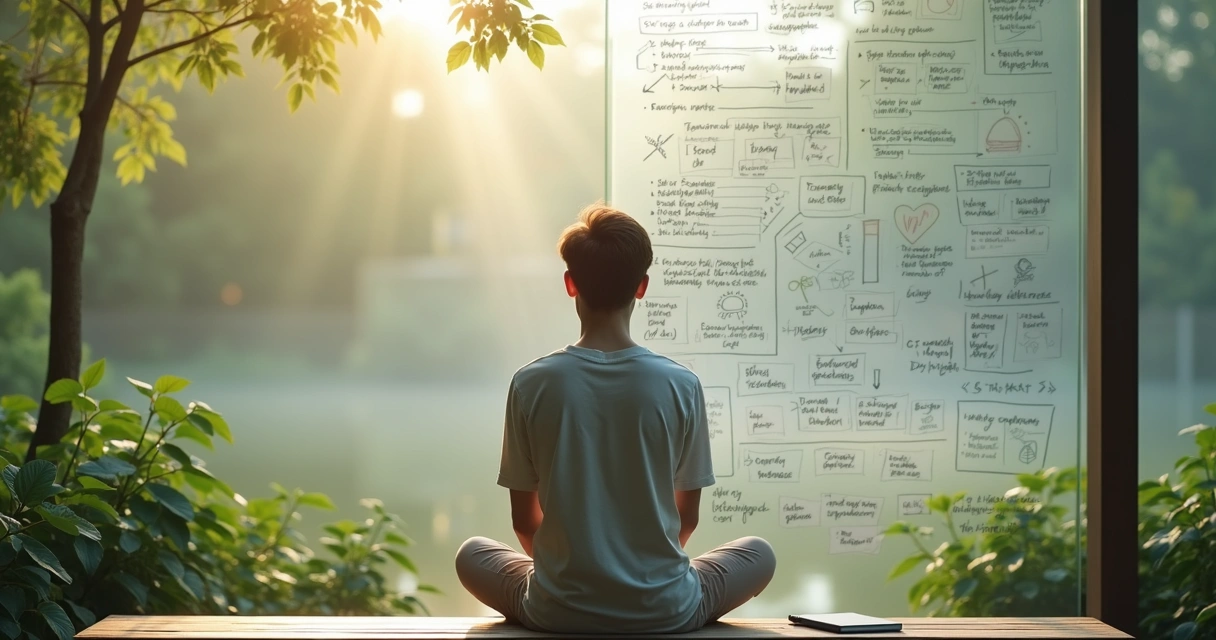


Some seasons of life feel stable. Others do not. A team changes. A family goes through loss. News cycles turn harsh. Money gets tight. Sleep gets poor. We start reacting faster than we think. In our experience, this is when emotional resilience stops being a nice idea and becomes a daily practice.
Emotional resilience is the ability to recover balance without denying pain.
We do not see resilience as hardness. We see it as flexible strength. A rigid branch snaps in strong wind. A living branch bends, holds, and returns. People work in a similar way. When conditions are unstable, our inner system needs room to feel, think, and respond with some order.
There is also a limit to the common idea that resilient people simply “bounce back.” Research on emotional life during the first months of the pandemic showed something subtle. Average negative emotions returned close to baseline over time, but positive emotions stayed lower, which shows both human recovery and its boundaries. We can see this in research on emotional adaptation during the early pandemic period. We recover, yes. But not always in every area at the same pace.
What resilience is not
When environments become tense, many people confuse resilience with suppression. We have seen this often. Someone says, “I am fine,” while their body says the opposite. Their jaw is tight. Their breath is shallow. Their patience is gone by noon.
Strength without awareness breaks down.
Resilience is not pretending. It is not constant optimism. It is not staying available to everyone while we fall apart inside. It is not emotional numbness dressed up as maturity.
A more honest view includes three movements:
- Feeling what is real without making it larger than it is.
- Giving meaning to the moment without dramatic self-talk.
- Choosing a response that protects our values and our energy.
That sounds simple. In practice, it takes training. Short training, repeated often.
Why turbulent environments affect us so fast
Turbulent environments disturb more than mood. They strain attention, sleep, trust, and memory. We stop reading signals clearly. We misread silence. We assume threat where there may only be uncertainty.
One person notices it in meetings. Another notices it at home, speaking too sharply to people they love. We may tell ourselves that the problem is outside us, and part of it is. But external pressure quickly becomes internal habit.
Resilience grows when we notice the shift from event to interpretation.
This matters because two people can face the same condition and still organize it in different ways. One sees total collapse. Another sees a hard season with limits and choices. The facts may be similar. The inner framing is not.
A broad review on resilience found a meaningful link between cognitive reappraisal and resilience, with a moderate positive correlation. In simple terms, people who get better at reinterpreting difficult situations tend to show stronger resilience over time. We can see this in the meta-analysis on cognitive reappraisal and personal resilience.

How we can build resilience in real time
We do not build resilience only in calm periods. We build it while life is happening. That is why the practices must be short enough to use under pressure.
Name the state
The first step is to name what is happening with plain language. Not a speech. Just a clear sentence. “We are overloaded.” “We feel rejected.” “We are anticipating a problem.” Naming a state reduces confusion. Confusion feeds reaction.
A named emotion becomes easier to guide.
Slow the body first
Most emotional spirals accelerate through the body. Heart rate rises. Muscles contract. Breathing shortens. If we try to reason well from that state, we usually fail. A few slow breaths, a longer exhale, a short walk, water on the face, or ten quiet seconds before answering can interrupt the chain.
We once heard someone say that one delayed reply saved a whole week of damage at work. That feels true. Many problems are not born from events. They are born from speed.
Reframe without lying
Reframing is not saying that everything is good. It is saying something more accurate than our first fear. For example:
- From “This is a disaster” to “This is a setback with real effects.”
- From “They are against us” to “We do not yet know their intention.”
- From “We always fail” to “We are struggling in this area right now.”
This kind of language protects reality while reducing distortion. That balance helps us act with more coherence.
Keep one stable routine
In unstable times, we do not need to fix everything at once. We need one steady point. It may be waking at the same hour, writing for ten minutes, eating without screens, or taking a walk before the day gets noisy. Small rhythm restores inner order.
We think many people dismiss this because it looks too ordinary. Yet ordinary structure often keeps emotional life from scattering.
Relationships and resilience
No one becomes resilient in complete isolation. Even reflective people need relational ground. A calm conversation, a wise question, or silent company can regulate a distressed mind more than long internal debate.
Healthy support usually has a few traits:
- It does not rush us to “move on.”
- It helps us separate fact from fear.
- It respects limits and timing.
- It invites responsibility without shame.
At the same time, we need discernment. Not every connection helps. Some people intensify agitation. Others turn our pain into gossip or advice too soon. Resilience includes choosing where we place our vulnerability.

What to do when resilience feels low
There are days when our best tools feel far away. We know what to do, but we cannot seem to do it. In those moments, we do better with reduction than with ambition.
Try a shorter list:
- Pause the non-urgent decision.
- Reduce one source of noise.
- Tell one trusted person the plain truth.
- Return to one next action only.
This does not solve the whole environment. It restores enough order for thought to return. Sometimes that is the win for the day.
Conclusion
Emotional resilience is not a perfect shield against unstable conditions. It is a way of staying inwardly organized while life is asking more from us. We build it through awareness, body regulation, honest reframing, and grounded relationships. We lose it sometimes too. Then we rebuild.
That is the part many people need to hear. Resilience is not measured by never shaking. It is measured by how we return, how we learn, and how we keep our values intact when pressure rises.
Calm is trained, not granted.
Frequently asked questions
What is emotional resilience?
Emotional resilience is the ability to regain balance after stress, loss, conflict, or uncertainty. It does not mean the absence of pain. It means we can feel pressure, process it, and still respond with some clarity and stability.
How can I build emotional resilience?
We can build emotional resilience through repeated habits such as naming emotions clearly, slowing the body during stress, reframing thoughts with honesty, keeping simple routines, and seeking steady support from trustworthy people. Small practices done often work better than dramatic changes.
Why is emotional resilience important?
It matters because unstable environments affect judgment, relationships, sleep, and emotional control. Resilience helps us recover faster, reduce impulsive reactions, and make choices that match our values even when life feels unsettled.
What are signs of strong resilience?
Common signs include recovering after setbacks, tolerating discomfort without collapse, asking for help when needed, adapting without losing self-respect, and staying capable of reflection during stress. Strong resilience looks steady, not perfect.
How to use resilience in daily life?
We use resilience in daily life by pausing before reacting, checking our interpretation of events, protecting one stable routine, and responding to pressure in smaller steps. Daily resilience is less about big moments and more about repeated choices under ordinary stress.