


Imagine waking up in 2026, starting your day with a mind clear enough to name not just how you feel, but exactly what you feel. Are you content, a little frustrated, quietly hopeful, or vividly inspired? This level of detail is called emotional granularity, and it is quickly becoming a fundamental skill for anyone serious about self-direction and growth.
What is emotional granularity?
Emotional granularity is the ability to notice, identify, and distinguish between subtle differences in one's emotional states. Instead of simply feeling “good” or “bad,” you can recognize feelings like disappointment, irritation, awe, anticipation, or serenity. The difference between “angry” and “irritated” or “elated” and “content” might seem slight, but for self-direction, these distinctions have real consequences.
The more precisely we can name our feelings, the more power we have to understand and direct our lives.
We have learned that people with high emotional granularity do not just express themselves more articulately—they steer themselves more wisely. By assigning words to their inner states, they make sense of their reactions and choose actions that fit the real needs of the moment.
Why does emotional granularity matter for self-direction?
Self-direction is not simply about choosing goals or planning actions. It depends on how we read ourselves. When our emotions stay blurry, our actions follow patterns that can feel automatic or random. We have seen that, by naming emotions correctly, people can step out of autopilot. Here's why this matters:
- Decision quality improves when we pinpoint what we really feel, rather than acting based on vague discomfort or stress.
- We can respond (not just react) to situations, since detailed emotions reveal underlying values and needs.
- Personal growth accelerates because we recognize what pushes or pulls us, often before we even act.
Imagine a situation at work where you feel “annoyed.” If you pause and realize the feeling is actually “overlooked” or “disrespected,” your next step changes. Maybe you ask for clearer communication or set a boundary, instead of reacting sharply. This small internal change can set a new course.

The link between naming emotions and changing direction
Self-direction flourishes when our awareness keeps pace with our intentions. Naming nuanced emotions does not just feel good—it actually shifts brain and body responses. Studies show that if we give a feeling a precise label, the emotional intensity drops and we activate parts of the brain linked to problem-solving. It is like finding the right map in a confusing city.
We believe that this upgrade is what separates “good intentions” from actions that stick. When we break apart “anxiety” into “anticipation” or “unease,” for instance, we gain options:
- If it is “anticipation,” perhaps we prepare or plan.
- If it is “unease” about a relationship, maybe we reach out or reflect.
- If it is “overwhelm,” we can prioritize or ask for help.
By refining our emotional vocabulary, we give ourselves the agency to choose and shape our experience.
Practicing emotional granularity in 2026
In 2026, technology and social change continue to demand flexible, resilient minds. We have noticed that the flood of information, shifting roles, and remote work settings all make emotional literacy more valuable than ever. Practicing emotional granularity is not just “nice to have”—it anchors us in targeted self-direction.
Naming our feelings, out loud or silently, is a revolutionary act of self-care.
Here is how anyone can increase emotional granularity, based on our research and the experience of those we have worked with:
- Pause and check in: Stop and turn inward. Ask yourself, “What exactly am I feeling?”
- Be specific: Avoid vague answers. Instead of “sad,” consider: “disappointed,” “lonely,” or “tired of waiting.”
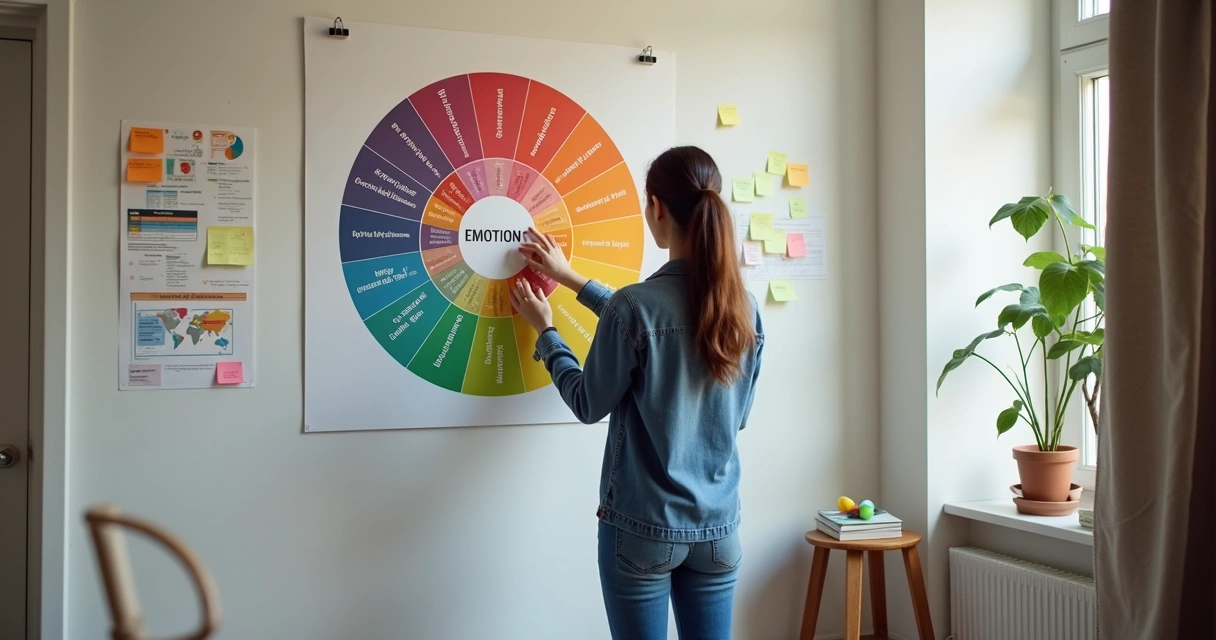
- Use emotion wheels or lists: These tools offer a menu of fine-grained emotions to choose from. Over time, remembering a few can change how you speak and act.
- Notice body signals: Often, the body holds clues to which exact feeling is present—tightness in the chest may mean fear, while heat in the face may signal embarrassment or anger.
- Reflect on triggers: If you spot patterns, certain people or situations may provoke specific shades of emotion. Naming them broadens your response options.
Imagine the difference this makes over days and weeks. A person who starts their week naming a hidden “resentment” instead of describing themselves as just “off” might reach solutions faster. Those who distinguish between “pride” and “arrogance” in conversations may repair misunderstandings before they erupt.
Fine emotional awareness and self-guided growth
This growing skill does not just affect moods. It shapes how we learn, grow, and build new habits. As we break emotions into finer parts, we light up more possibilities for action and reflection.
For example, when building a new routine, facing setbacks, or making relationships stronger, those who can name emotions with care are more likely to stay on track.
- They know when “tired” means simple fatigue or deeper boredom.
- They can tell when “nervous” is a cue for caution, or a signal of untapped excitement for a new path.
- They manage setbacks because they spot “frustration” rather than just “bad days.”
In our experience, workplaces, families, and teams all see the difference when their members care about this skill. Plans become easier to make and easier to adjust. Conflicts shrink. Growth feels less random and more like a series of chosen steps.
You cannot steer a ship by the wind alone—you need a compass. Emotional granularity is that compass.
Conclusion
In 2026, when self-direction is our most personal task, emotional granularity is not just self-improvement—it is self-knowledge in action. The more skillfully we can name our own inner weather, the more options we have for growth, change, and building meaning in our lives.The world only grows faster and louder, so the power to direct ourselves grows even more valuable. Emotional granularity gives us a steady guide, one word at a time.
Frequently asked questions
What is emotional granularity in self-direction?
Emotional granularity is the ability to accurately recognize, name, and distinguish between different emotions within oneself. In self-direction, it helps us guide our choices and behaviors with more precision, because we understand exactly what is happening inside us rather than acting from vague feelings.
How can I improve emotional granularity skills?
You can build this skill by making a habit of pausing and noticing what you are truly feeling. We suggest practicing with emotion wheels or lists, journaling about your reactions, and discussing feelings in more detail with trusted people. Over time, you will naturally find and use more words to describe your inner states.
Why does emotional granularity matter in 2026?
In 2026, people face faster change, more information, and complex relationships than ever. Emotional granularity gives us tools to adapt and choose well in challenging, shifting environments. It supports resilience, communication, and clear-headed self-direction.
Is emotional granularity worth developing now?
Yes. Developing emotional granularity is a powerful way to improve your self-awareness and adaptability right now. It leads to better decisions, fewer misunderstandings, and more effective responses to daily challenges in all areas of life.
What are the benefits of emotional granularity?
The benefits include improved emotional regulation, stronger relationships, clearer self-understanding, and better mental health. People with this skill tend to manage stress with more ease and grow from setbacks by identifying what truly affects them.